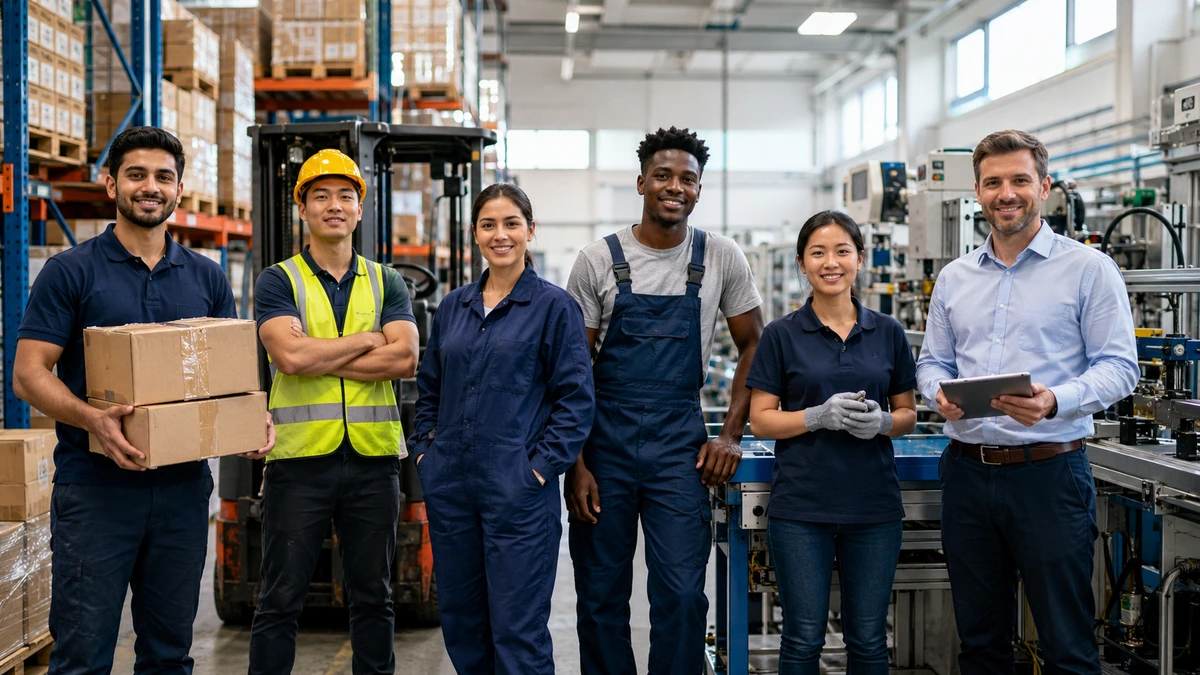
Warehouse and factory jobs abroad are popular among foreign workers who want practical overseas work, stable income, and international job experience without always needing a university degree. Many workers search for these jobs because warehouses, factories, food processing plants, packaging centres, logistics companies, and manufacturing businesses need reliable workers to keep operations running.
For many applicants, warehouse and factory jobs abroad look attractive because the work can be practical and skill-based. Some roles may need previous experience, while others may focus more on physical ability, attention to detail, teamwork, safety awareness, and willingness to learn.
However, foreign workers should understand one important point: not every warehouse or factory job abroad comes with visa support. A real opportunity depends on the country, employer, job type, work permit route, experience level, documents, and local labour rules.
This guide explains warehouse and factory jobs abroad for foreign workers in 2026, including common job roles, popular countries, requirements, salary expectations, documents, safe application tips, and scam warning signs. If you are still comparing different overseas work options, you may also read this guide on visa sponsorship jobs for foreign workers.
Quick Answer
Warehouse and factory jobs abroad may be available in roles such as warehouse associate, picker and packer, forklift operator, production worker, packaging assistant, machine operator, food processing worker, quality control helper, assembly line worker, cleaner, loading assistant, and inventory support worker.
Countries such as Canada, the United Kingdom, Australia, New Zealand, Germany, Ireland, and some Gulf countries may have warehouse or factory roles depending on employer demand and visa rules. Some jobs may offer employer support if the company is eligible and the worker meets requirements.
Foreign workers should prepare a strong CV, valid passport, work experience proof, training certificates if available, references, basic English or local language ability, and clean documents. Applicants should avoid fake job offers, guaranteed visa promises, and recruiters who ask for money before verification.
Why Warehouse and Factory Jobs Abroad Are Popular
Warehouse and factory jobs abroad are popular because they are connected to industries that operate every day. Food, clothing, electronics, furniture, medicine, packaging, online shopping, logistics, and manufacturing all depend on workers who can organize, produce, pack, check, and move goods.
Many foreign workers already have similar experience in their home country. A person may have worked in a garment factory, food factory, packaging company, warehouse, supermarket supply chain, cold storage, delivery centre, or manufacturing unit. This experience can be useful when applying abroad.
Another reason these jobs are popular is that some roles may not require advanced academic qualifications. But this does not mean the jobs are easy. Warehouse and factory work can involve standing for long hours, repetitive tasks, shift work, cold rooms, machine safety, heavy lifting, and production targets.
Applicants should be honest and realistic. Employers usually want workers who are punctual, careful, physically ready, able to follow instructions, and willing to respect workplace safety rules.
What Types of Warehouse and Factory Jobs Are Available?
Warehouse and factory jobs abroad can include many different roles. The best role depends on your experience, physical ability, training, and target country.
Warehouse Associate: Warehouse associates help receive goods, store items, prepare orders, check stock, label products, and support daily warehouse operations.
Picker and Packer: Pickers collect items from shelves or storage areas, while packers prepare items for delivery. This role needs speed, accuracy, and attention to detail.
Forklift Operator: Forklift operators move pallets, boxes, materials, and heavy items using forklift machines. Proper training and licence may be required.
Production Worker: Production workers support factory lines, assemble products, operate simple machines, check items, and follow production instructions.
Machine Operator: Machine operators run production machines, check settings, report problems, and follow safety procedures. Experience can be important for this role.
Food Processing Worker: Food processing workers prepare, pack, sort, clean, and handle food products. Hygiene and safety rules are very important.
Quality Control Helper: Quality workers check products for damage, size, weight, packaging, labelling, and production standards.
Loading Assistant: Loading workers help move goods into trucks, containers, shelves, or storage areas. This role may require physical strength and teamwork.
Best Countries for Warehouse and Factory Jobs Abroad
Warehouse and factory jobs abroad can be searched in different countries, but each country has its own work permit rules. Applicants should not assume that one country’s process is the same as another.
Canada: Canada may have warehouse, food processing, packaging, logistics, and manufacturing roles depending on employer demand and location. Workers who want a broader country guide can read Canada jobs with visa sponsorship.
United Kingdom: The UK may have warehouse and food production roles, but visa eligibility depends on occupation rules, employer sponsorship, salary level, and current immigration requirements.
Australia: Australia may have factory, warehouse, food processing, meat processing, logistics, and production jobs depending on region and employer. Some roles may be more realistic if they are connected with skilled or shortage-based categories.
New Zealand: New Zealand may have packhouse, food production, warehouse, dairy processing, and seasonal production roles. Some applicants compare factory work with agriculture work, such as New Zealand farm jobs for foreigners.
Germany: Germany has strong manufacturing and industrial sectors. Factory roles may include machine operation, production assistance, assembly, packaging, and quality control. Language and qualification requirements can vary.
Gulf Countries: UAE, Qatar, Saudi Arabia, Oman, Bahrain, and Kuwait may have warehouse, logistics, factory, and packaging jobs. Applicants should carefully check contracts, salary, accommodation, and recruitment rules.
Warehouse Jobs Abroad for Foreign Workers
Warehouse jobs abroad can be suitable for workers who are organized, physically active, and comfortable with stock handling. Warehouses are used by online shopping companies, supermarkets, food suppliers, electronics businesses, clothing brands, logistics companies, and manufacturers.
Common duties may include receiving deliveries, checking items, scanning barcodes, storing goods, picking orders, packing boxes, loading trucks, cleaning warehouse areas, and supporting inventory teams.
Some warehouse jobs require experience with scanners, pallet jacks, forklift machines, inventory systems, or cold storage. Other jobs may provide training for selected workers, depending on the employer.
Warehouse work can be busy. Workers may need to meet daily targets, stand for long hours, work in shifts, and follow safety rules. A good warehouse worker should be careful, fast, honest, and able to work with a team.
Factory Jobs Abroad for Foreign Workers
Factory jobs abroad can include production, packaging, assembly, machine operation, food processing, garment production, electronics assembly, plastic production, metal work, furniture manufacturing, and quality control.
Factory work usually follows a process. Workers may repeat similar tasks, check product quality, operate machines, pack items, clean work areas, and report problems to supervisors.
Some factory jobs are entry-level, while others require technical skills. Machine operators, maintenance workers, quality inspectors, and production supervisors may need more experience than basic production workers.
Applicants should not treat factory work as simple. Many factories have strict safety, hygiene, and quality standards. Workers must follow instructions carefully because mistakes can affect production and safety.
Basic Requirements for Warehouse and Factory Jobs Abroad
Requirements for warehouse and factory jobs abroad depend on the employer, country, visa route, and role. However, many foreign workers should prepare the following:
- Valid passport
- Updated CV or resume
- Work experience letters if available
- Factory, warehouse, packaging, or production experience proof
- Training certificates if available
- Forklift licence if required
- Food safety or hygiene certificate if required
- Basic English or local language ability
- Police clearance if required
- Medical exam if required
- Reference letters from previous employers
- Clean document scans
Some employers may accept applicants with limited experience for basic roles, but experienced workers usually have better chances. If you have worked in a factory, warehouse, packaging line, cold storage, food plant, or logistics company, mention it clearly in your CV.
Foreign workers should also be ready for physical tasks. Many jobs involve lifting, standing, walking, bending, pushing carts, carrying boxes, and working in busy environments.
Skills That Can Improve Your Chances
Warehouse and factory jobs abroad require more than physical effort. Employers usually look for workers who can follow rules, work safely, and stay consistent.
Attention to detail: Workers should check labels, quantities, product condition, dates, sizes, and instructions carefully.
Speed and accuracy: Many warehouses and factories have targets, but workers must still avoid mistakes.
Teamwork: Production and warehouse work depends on team coordination.
Safety awareness: Workers must follow rules around machines, forklifts, chemicals, sharp tools, lifting, and emergency procedures.
Basic communication: Workers should understand instructions, report problems, and communicate with supervisors.
Machine awareness: Experience with production machines, scanners, conveyors, pallet jacks, or forklift equipment can help.
Digital basics: Some warehouses use barcode scanners, inventory software, mobile apps, and digital order systems. For general digital learning, readers can explore technology guides and digital information.
Salary and Work Conditions
Salary for warehouse and factory jobs abroad depends on country, employer, role, experience, shift pattern, overtime, and contract terms. A forklift operator, machine operator, production worker, packer, quality control helper, and warehouse supervisor may not earn the same salary.
Some jobs pay hourly wages, while others may offer monthly salary. Some employers may provide accommodation, meals, transport, uniforms, or training, but this is not guaranteed.
Applicants should always ask for written details about wage, working hours, overtime, deductions, accommodation, transport, probation, contract length, and benefits.
Do not trust social media posts that show very high salary without details. Real employers explain job terms clearly and do not normally promise unrealistic pay for basic roles.
How to Find Real Warehouse and Factory Jobs Abroad
Finding real warehouse and factory jobs abroad takes patience. Applicants should not depend only on Facebook posts, WhatsApp groups, or screenshots.
Start by checking company websites, factory career pages, logistics companies, recognized job platforms, recruitment agencies, and employer job boards. Search terms may include “warehouse jobs abroad for foreigners,” “factory jobs abroad for foreign workers,” “packer jobs with visa support,” “food processing jobs abroad,” and “production worker jobs abroad.”
Read the full job description. Check the role, location, salary, work hours, visa support, accommodation, experience requirement, and employer name. If the job says applicants must already have work authorization in that country, it may not be suitable for overseas applicants.
Workers interested in logistics can also compare warehouse work with transport roles such as truck driver jobs in Canada for foreigners. This can help you decide whether warehouse support or driving work fits your background better.
How to Prepare a Strong CV
A warehouse or factory CV should be simple and practical. Employers want to know what work you can do, what experience you have, and whether you can follow safety rules.
Start with your name, phone number, email, country, and target job title. Then write a short professional summary. For example, mention your years of experience in packing, production, warehouse support, food processing, machine operation, or quality control.
List your work experience clearly. Include company name, job title, country, dates, duties, machines used, products handled, and achievements. Mention if you worked with scanners, packing lines, cold storage, forklifts, conveyor belts, or inventory systems.
Add certificates, training, language ability, and references. If you have food safety, forklift, workplace safety, or machine operation training, include it.
Do not add fake experience. Employers may ask practical questions in interviews or check references. Honest experience is always safer than false claims.
How to Apply Safely
Safe application is important because warehouse and factory jobs abroad are often used in fake job posts. Scammers know many people want simple overseas work, so they use attractive salary and visa promises.
First, apply only through real companies, recognized job platforms, and verified recruiters. Check whether the employer has a website, business address, company email, and professional hiring process.
Second, ask clear questions before accepting an offer. Ask about job duties, salary, work hours, overtime, accommodation, transport, visa support, contract length, and deductions.
Third, never pay for guaranteed job offers, fake sponsorship letters, or instant visa approval. A real employer process should include interview, documents, written contract, and proper visa steps.
If you receive a genuine offer and plan to travel, it can also help to understand travel insurance and family health insurance topics before making final arrangements.
Common Mistakes to Avoid
Many applicants lose opportunities because of simple mistakes. If you are serious about warehouse and factory jobs abroad, avoid these problems:
- Using a weak CV with no clear job experience
- Applying to every job without matching skills
- Claiming fake warehouse or factory experience
- Ignoring physical work conditions
- Not asking about accommodation and deductions
- Not checking whether visa support is real
- Paying money for guaranteed job promises
- Sending documents to unknown social media accounts
- Accepting unclear contracts
- Ignoring safety rules and shift requirements
Warehouse and factory jobs require discipline. Employers prefer workers who are honest, punctual, careful, and able to follow instructions.
Red Flags of Fake Warehouse and Factory Job Offers
Fake recruiters often use warehouse and factory job ads because these roles are popular among foreign workers. Be careful if you notice these warning signs:
- The recruiter promises 100% visa approval
- The job offer comes without interview
- The salary is very high for a basic role
- The employer name is missing or cannot be verified
- The email address looks unprofessional
- You are asked to pay quickly before verification
- The offer letter has spelling mistakes
- The job duties are not clearly explained
- The visa type is not mentioned
- You are told not to contact the employer directly
A real employer process should feel professional. There should be a clear job description, proper communication, interview, written contract, and visa explanation. If something feels too easy, verify before taking action.
Best Application Strategy for 2026
A smart strategy can improve your chance of finding warehouse and factory jobs abroad. Do not send the same weak CV to every employer. Focus on roles that match your real background.
Choose two or three target roles. For example, if you have packing experience, focus on picker, packer, and production roles. If you have machine experience, focus on machine operator and production assistant roles. If you have logistics experience, focus on warehouse associate and inventory support roles.
Create an application tracker. Add company name, job title, country, date applied, email, response status, and notes. This helps you stay organized and avoid repeating the same mistakes.
Improve your basic workplace English. Learn words related to packing, loading, safety, machine, shift, supervisor, warehouse, product, barcode, stock, delivery, and quality control.
For more overseas work-related guides, readers can also explore jobs and visa sponsorship guides.
Frequently Asked Questions
Can foreigners apply for warehouse and factory jobs abroad in 2026?
Yes, foreigners can apply for warehouse and factory jobs abroad, but eligibility depends on the country, employer, visa route, experience, documents, and work permit rules. No job or visa is guaranteed.
Which warehouse and factory jobs are best for foreign workers?
Common roles include warehouse associate, picker and packer, production worker, food processing worker, machine operator, forklift operator, quality control helper, and loading assistant.
Do I need experience for warehouse and factory jobs abroad?
Some entry-level roles may accept limited experience, but having warehouse, factory, packing, production, or machine experience can improve your chances.
Can I get visa support for factory jobs abroad?
Some employers may support eligible foreign workers, but it depends on country rules, employer eligibility, job type, and applicant documents.
Are warehouse and factory jobs physically hard?
Yes, many roles involve standing, lifting, repetitive tasks, shift work, and fast-paced environments. Applicants should understand the work conditions before accepting.
Should I pay an agent for a factory job abroad?
Be careful. Do not pay for guaranteed job offers or fake visa promises. If using a recruiter, verify their identity and connection to a real employer.
Is a job offer enough for a work visa?
No. A job offer may support the process, but applicants must still meet visa requirements and submit correct documents.
Final Verdict
Warehouse and factory jobs abroad can be a good opportunity for foreign workers who have practical experience in packing, production, loading, food processing, machine operation, quality control, warehouse support, or logistics.
The best approach is to prepare a strong CV, apply to real employers, understand the job duties, check visa support carefully, and avoid fake promises. These jobs can offer valuable overseas experience, but they require physical effort, discipline, safety awareness, and patience.
If you are serious about applying, choose the right job category for your background. Prepare your documents, improve your communication, apply consistently, and verify every employer before sharing personal information or making any payment.
Disclaimer
This article is for general informational purposes only. Visa rules, job requirements, salary levels, employer support policies, accommodation terms, and immigration processes can change at any time. Always verify the latest information from official sources, qualified professionals, or the employer before applying. This article does not guarantee any job offer, visa support, work permit, or immigration result.